
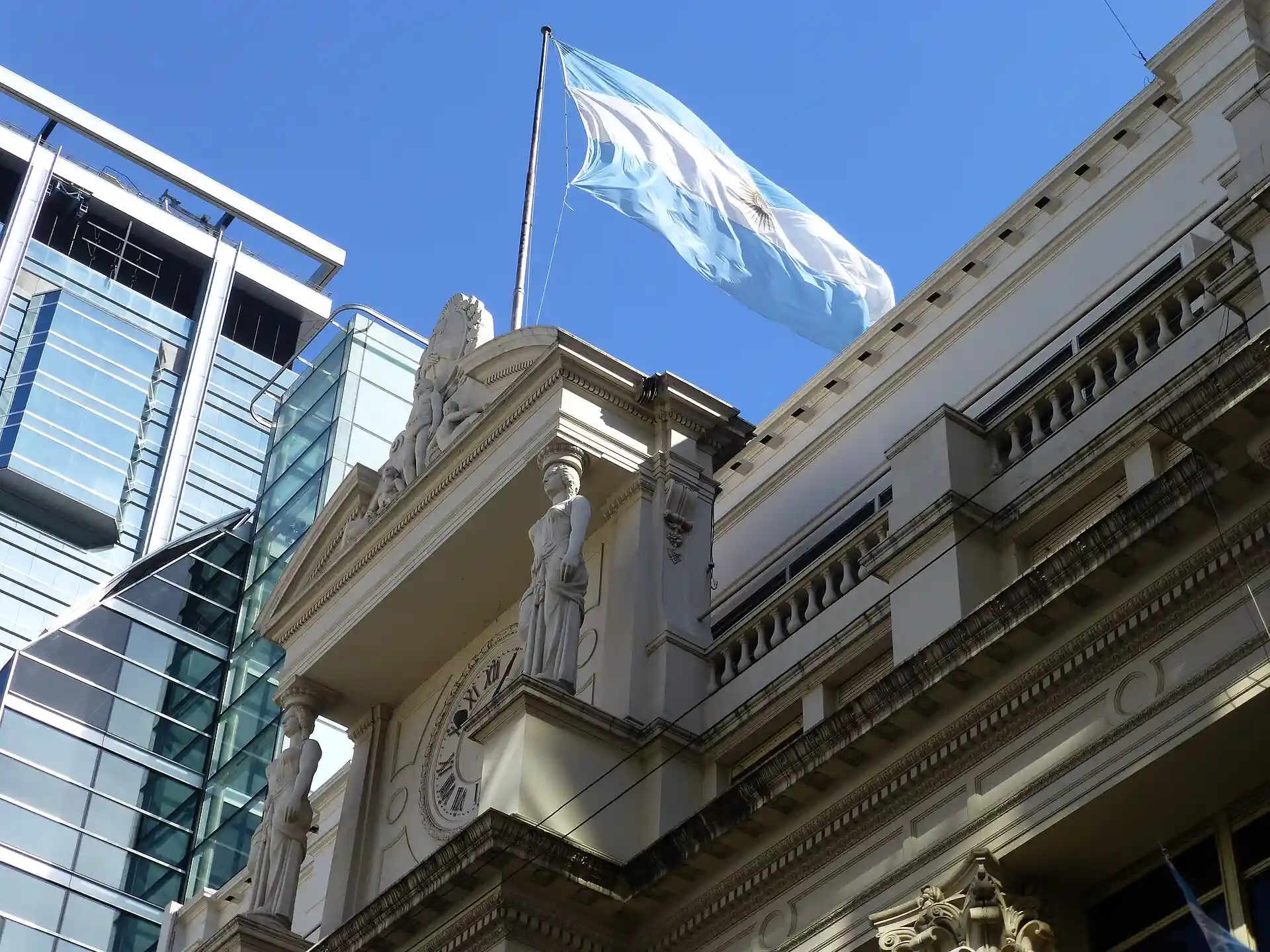
The Argentine financial system has been historically marked by its duality and regulatory complexity. At the center of this ecosystem lies the Single and Free Exchange Market (MULC): despite being the axis around which all export, import, and external debt operations revolve, it remains a mystery to many entrepreneurs and savers operating in the international market.
The market's name itself often causes confusion. In fact, the first myth to debunk involves its name: while it is commonly known as MULC, its official name as of 2024 has transitioned to MLC (Free Exchange Market).
In an economic transition context like the one observed between 2024 and 2026, understanding what is myth and what is reality is vital for financial planning. For companies, service exporters, and savers, understanding the regulations of the Central Bank of the Argentine Republic (BCRA) is crucial. Below, we break down the 5 most persistent myths using data updated as of March 2026.
1. The MULC is a "free" market
There is an idea that, because it is called "free," any actor can transact without prior technical validations.
- The reality: the MULC is a managed wholesale market. Between 2023 and mid-2025, it was one of the most intervened markets in the world under the currency restriction system.
- The data: in 2024, access was not immediate; the BCRA established a staggered payment schedule (installments of 30, 60, 90, and 120 days) for importers.
- 2026 context: following the elimination of reserve requirements and the currency unification completed in early 2026, the market operates under a managed float scheme. The BCRA no longer prohibits access but maintains macroprudential oversight to mitigate excessive volatility, similar to the models used by the Central Bank of Chile.
2. Individuals are prohibited from accessing it
Many believe that the MULC is exclusive to commercial banks (such as Banco Nación or Santander) and large exporters.
- The reality: individuals access it daily through regulated but constant operations.
- Figures and evolution:
- 2023-2024: the "Savings Dollar" quota was limited to $200 USD per month with a tax burden exceeding 100%.
- 2025: with the exchange rate gap narrowing to below 10%, the removal of the PAIS Tax began (finalized in December 2024).
- 2026: today, an individual accesses the MULC when paying for digital services or purchasing foreign currency for savings through their online banking, provided they comply with the current Communication "A" from the BCRA regarding the origin of funds.
3. Exporters must liquidate 100% at the "lagging" official rate
This myth stems from the era when there was a 120% gap between the official rate and financial exchange rates.
- The reality: in late 2023, Decree 28/2023 consolidated the "Blend Dollar" scheme (Export Increase Program).
- The mechanism: this scheme allowed liquidating 80% through the MULC and 20% via the Blue Chip Swap (CCL) market.
- 2026 milestone: with the currency unification following the agreement with the IMF in 2025, the "blend" was discontinued. Currently, exporters liquidate 100% in a unified market, recovering real exchange rate competitiveness.
4. SMEs cannot import through the MULC
It was believed that the system was blocked for small businesses due to the discretionary bureaucracy of the old SIRA system.
- The reality: in December 2023, the SEDI system (Statistical System of Imports) replaced the SIRA, eliminating official discretion.
- Key tools:
- BOPREAL: during 2024, the BCRA issued the Bonds for the Reconstruction of a Free Argentina to channel commercial debt of over $42 billion USD with foreign suppliers.
- Present day: in 2026, SMEs access the MULC automatically for input payments, reducing operating costs by avoiding the "spread" of financial dollars.
5. The MULC will disappear without the "cepo" (currency clamp)
The belief is that total freedom implies the extinction of the centralized wholesale market.
- The reality: the MULC is not a restriction, but an infrastructure. It is the platform where banks settle foreign exchange balances.
- Current status (March 2026): the elimination of capital controls transformed the MULC from an "allocation" system to one of real supply and demand. The BCRA now acts as a liquidity regulator that intervenes only to smooth seasonal spikes from the main harvest or extraordinary energy demands.
Conclusion
Understanding how the exchange market works today requires leaving behind the news from 2022 or 2023. In the current 2026 scenario, Argentina has moved toward financial integration where the MULC is the engine that enables foreign direct investment and foreign trade without the frictions of the past.